The AI Energy Crunch: Why Big Tech’s Pivot to Natural Gas Is Facing a Financial and Operational Wall

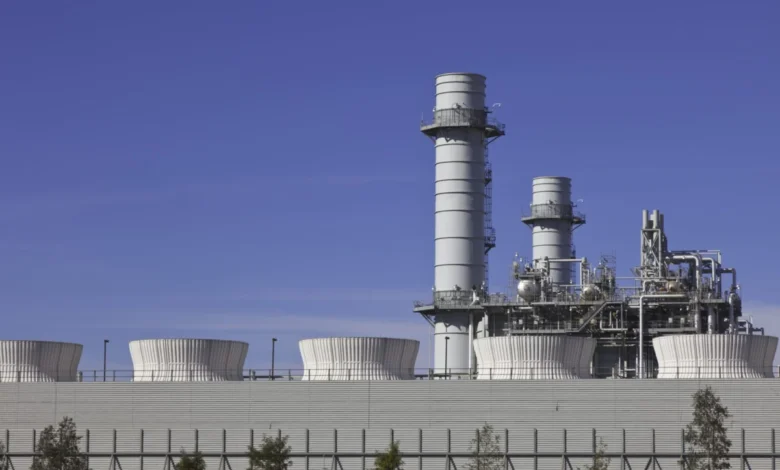
The rapid expansion of artificial intelligence infrastructure is precipitating a profound energy crisis, forcing industry titans like Microsoft and Meta to scramble for reliable power. As these tech giants pivot away from intermittent renewables toward natural gas to meet the voracious electricity demands of their massive data centers, they are encountering an unexpected, compounding obstacle: a staggering rise in construction costs and lead times. A recent report from BloombergNEF indicates that the price to construct a new combined cycle gas turbine (CCGT) power plant has surged 66% over the last two years, shifting from under $1,500 per kilowatt of capacity in 2023 to $2,157 in 2024. This economic shift, coupled with a 23% increase in construction timelines, threatens to upend the business models of the world’s largest cloud providers.
The Anatomy of an Energy Crisis
The fundamental driver of this trend is the unprecedented scaling of data centers. AI models, which require thousands of high-performance GPUs operating in tandem, demand a level of power density previously unseen in the tech sector. Historically, a "large" data center might have required 20 to 50 megawatts of power. Today, the industry is trending toward facilities that exceed 100 megawatts, with some hyperscale campuses targeting gigawatt-scale power consumption.
According to long-term projections, data center energy demand is expected to balloon to 106 gigawatts by 2035—a nearly 300% increase from the 40 gigawatts consumed today. While the tech industry has previously favored green energy through Power Purchase Agreements (PPAs) for solar and wind, the limitations of battery storage technology and the need for "always-on" base-load power have forced a strategic retreat to fossil fuels. The Trump administration’s recent guidance, which effectively pressures data center operators to "bring their own power" rather than relying on overburdened public grids, has accelerated this shift toward onsite gas-fired generation.
Chronology of the Infrastructure Bottleneck
The current predicament is the result of several converging economic and geopolitical factors that have unfolded over the past five years.
- 2019-2021: Natural gas prices and turbine manufacturing costs remain relatively stable, with the industry largely focused on integrating renewable energy into existing grid infrastructure.
- 2022-2023: The global energy landscape shifts as geopolitical instability—including the ongoing conflict in Iran—creates volatility in global energy markets. While U.S. domestic natural gas prices remain historically low, the supply chain for power generation equipment begins to fracture.
- 2024: The "AI Gold Rush" reaches a fever pitch. Hyperscalers begin aggressive procurement of natural gas turbines, leading to a demand-supply mismatch.
- 2025: The cost of gas turbines—the heart of the CCGT plant—spikes by an estimated 195% compared to 2019 levels. Lead times for these components stretch from months to years, with current waitlists extending into the early 2030s.
The manufacturing process for these turbines is notoriously difficult to scale. Unlike modular solar panels, high-efficiency gas turbines require specialized metallurgy and precision engineering, creating a "chokepoint" in the energy supply chain that cannot be easily bypassed by capital expenditure alone.
Economic Implications for Utilities and the Public
The surge in data center power demand has created a contentious relationship between tech companies and local utility providers. Under traditional regulatory models, utilities are often permitted to pass the costs of new generation and grid upgrades directly to ratepayers. As data centers demand billions of dollars in new infrastructure, the resulting increase in electricity prices for residential and commercial customers has sparked a growing public backlash.
In various regions, local communities are increasingly opposing the construction of massive data centers, citing both the aesthetic impact and the potential for rising utility bills. The directive for tech companies to "bring their own power" is, in part, a political response to this backlash. By building their own CCGT plants, companies hope to bypass local grid congestion and reduce the burden on public utilities. However, as the BloombergNEF report highlights, the economics of this strategy are rapidly deteriorating. The 66% increase in construction costs suggests that the "self-powered" model may be significantly more expensive than previously forecasted, potentially impacting the profitability of AI services that rely on these data centers.

Divergent Strategies: The Google Approach
While Microsoft, Meta, and others are heavily invested in natural gas, the industry is not uniform in its strategy. Google has taken a notably different path, signaling a long-term commitment to a "renewables-plus-storage" model.
Google’s strategy centers on the integration of long-duration energy storage (LDES) technologies. A prime example is the company’s exploration of iron-air batteries, such as those developed by Form Energy. These batteries are designed to discharge electricity over 100 hours, a significant improvement over the four-hour duration common with traditional lithium-ion grid storage.
The economic argument for this approach is compelling. Unlike natural gas, where the underlying infrastructure cost is subject to inflationary pressure and supply chain constraints, the Levelized Cost of Energy (LCOE) for solar and wind, when paired with emerging battery technology, has trended downward. For tech companies with the capital to invest in multi-year research and development, this path offers a hedge against the volatility of the fossil fuel market and the potential for future carbon-related regulations.
Fact-Based Analysis of the Path Forward
The tech industry currently finds itself at a crossroads. The immediate need for power to support generative AI training and inference cycles is outpacing the speed at which clean energy grids can be expanded. Natural gas, despite its volatile construction costs and supply chain bottlenecks, remains the only viable short-term solution for providing the high-reliability, 24/7 power that hyperscale data centers require.
However, the 195% spike in turbine costs suggests that the "gas-heavy" strategy is reaching a point of diminishing returns. Analysts suggest three potential outcomes for the sector:
- Increased Modularization: Tech companies may move toward smaller, modular gas generation units that can be deployed faster, though these may lack the efficiency of the massive CCGT plants currently being built.
- Accelerated Decarbonization: As the cost of fossil-fuel-based power rises, the price gap between gas and renewable alternatives is closing. This may incentivize a faster-than-expected transition to nuclear energy (particularly Small Modular Reactors, or SMRs) or advanced geothermal projects, which offer the same "always-on" characteristics as gas without the same fuel-price volatility.
- Efficiency Gains: The industry may be forced to focus more heavily on software-defined energy efficiency—optimizing AI workloads to run during off-peak hours or in regions where grid capacity is underutilized, effectively "load shifting" the energy burden.
Conclusion
The narrative that AI is an abstract, cloud-based phenomenon is being rapidly dismantled by the physical reality of the power grid. The "embrace" of natural gas by tech companies is a pragmatic, albeit expensive, necessity that has created a ripple effect through global energy markets. As the cost of building power generation climbs and the timelines for completion extend, the financial viability of the AI infrastructure boom will be put to the test.
For the public, the implications are twofold: the potential for higher energy costs as infrastructure is built out, and a front-row seat to a massive industrial experiment in energy sourcing. Whether the industry sticks to the traditional fossil fuel playbook or successfully pivots to the long-duration storage models pioneered by companies like Google, one fact remains clear: the era of "cheap, invisible" power for the tech sector is effectively over. The coming decade will be defined by how these companies balance the insatiable demand for computation with the harsh, rising costs of the electrons required to fuel it.
Related posts: